

Photo credit: J. Satore
Bull Trout (Salvelinus confluentus) are a native fish that spawn in the cold headwaters of the Yakima Basin and migrate extensively up and down the Yakima and Naches Rivers. Local biologists started monitoring the status of the 12 individual populations in the basin in the 1980s. Since then, some some of our populations have declined to dangerously low levels, or in a few cases, disappeared. Bull Trout were listed as Threatened under the Endangered Species Act (ESA) in 1998, and the U.S. Fish and Wildlife Service (USFWS) is responsible for recovery planning and consultation on actions that may affect the species. WDFW plays a lead role in monitoring and managing bull trout and ensuring fisheries do not negatively impact them. Recently the Yakama Nation started the Upper Yakima Bull Trout Restoration and Monitoring Project with support from the Bureau of Reclamation and the Department of Ecology. The Yakima Bull Trout Working Group is an informal group convened by the Yakima Basin Fish and Wildlife Recovery Board that brings together those active in Bull Trout conservation in the basin to share information and coordinate activities.
In 2012, local Bull Trout biologists in the Yakima Basin completed the Yakima Bull Trout Action Plan, which was updated by the Yakima Bull Trout Working Group in 2017. We are currently working on another update that will be finished in the Spring of 2026. This document is the go-to place for detailed information on the status of each population in the Yakima Basin and the actions that will be needed to stop their decline. Recently, the Fish Habitat Sub- Committee for the Yakima Basin Integrated Plan released the 10-year plan for Bull Trout. This plan outlines actions and goals to be funded by the Yakima Basin Integrated Plan (YBIP) for the recovery of Bull Trout populations. The document is intended to provide guidance in development of the state YBIP budget. In addition, the 10-year plan will inform and provide synergy with other funding opportunities.
USFWS released the final USFWS Bull Trout Recovery Plan in Sept 2015; the federal plan draws heavily from the local Bull Trout Action Plan in its section on the Yakima Basin. Key parties in the Yakima Basin signed a 2015 Memorandum of Understanding committing each other to working on recovery of Bull Trout in the Yakima Basin. The Bureau of Reclamation also issued its Bull Trout Enhancement Plan in 2015; it focuses on actions to benefit the Gold Creek, Kachess and Box Canyon populations that will help offset any impacts on Bull Trout from planned water supply projects.
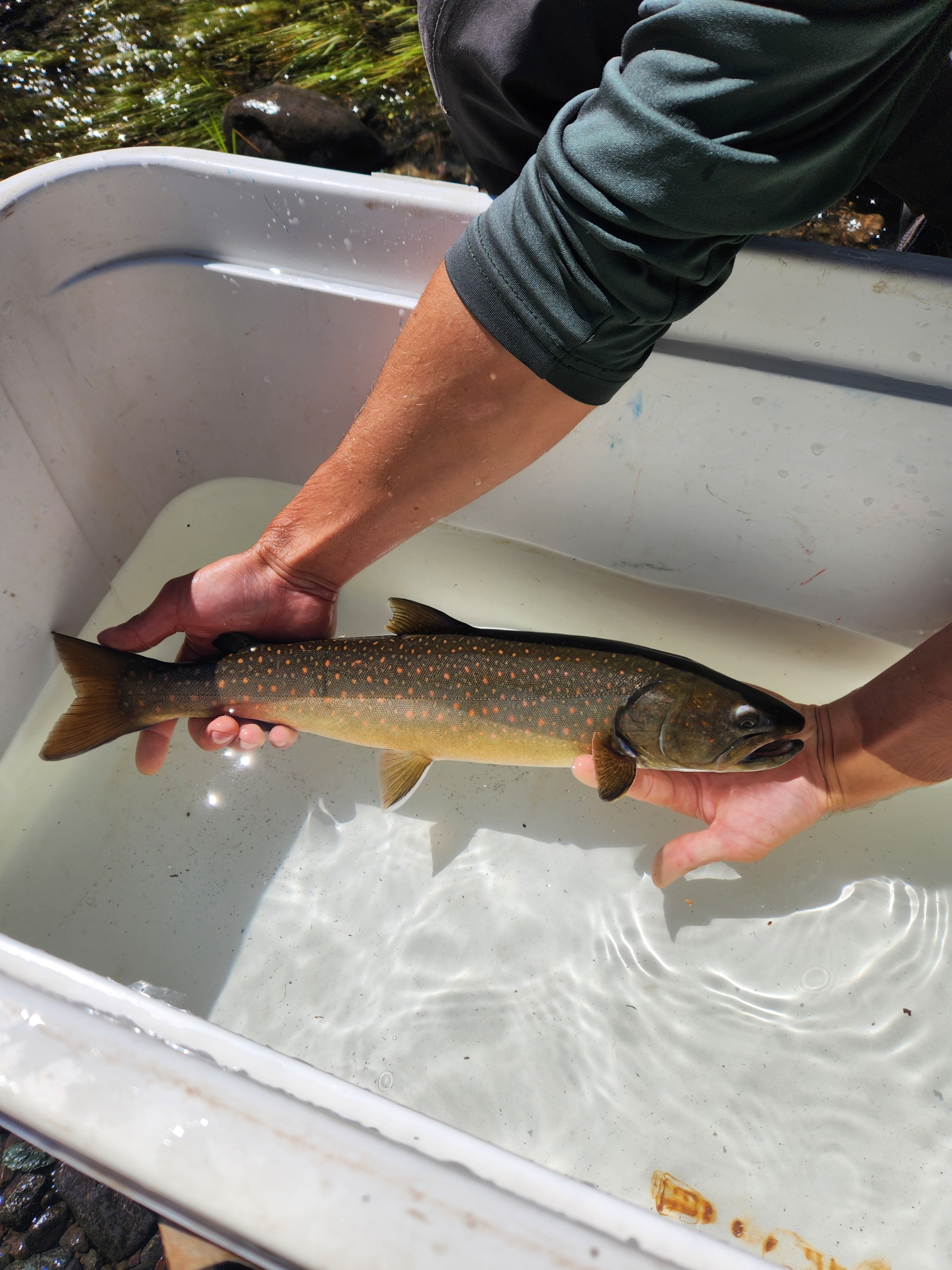
A bull trout caught at the base of Clear Creek Dam during the trap and haul project, implemented by US Fish and Wildlife Service

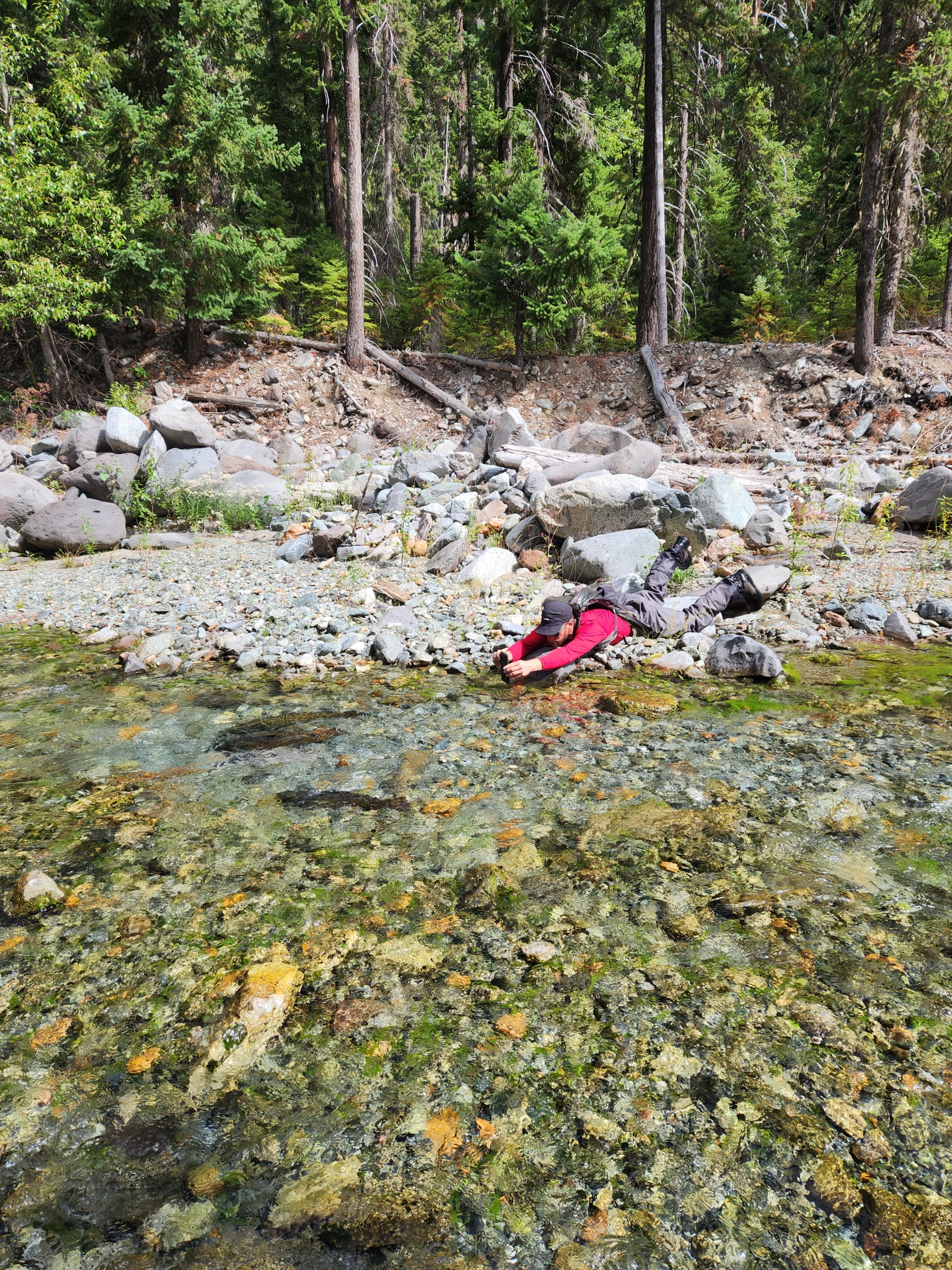
Five bull trout on a redd (spawning nest) in a Yakima Basin tributary. The photographer on the opposite bank is trying to sneak a close-up.

Bull Trout Task Force Members posting educational signs.
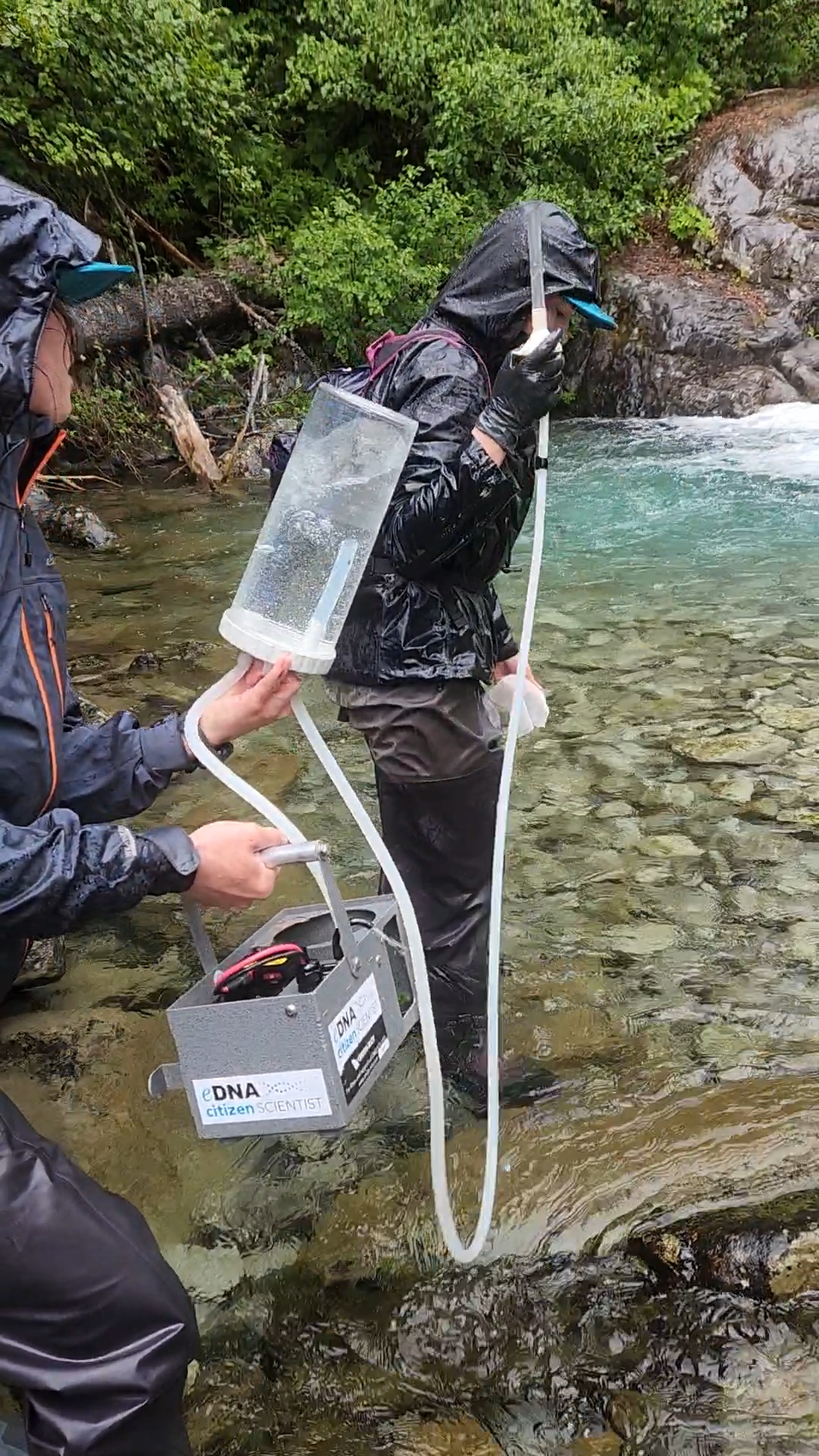
Bull Trout Task Force members collecting water samples for environmental DNA (eDNA) in the upper Waptus River
Partners in the basin are completing ambitious Bull Trout projects. Just a few examples: Each field season, Mid-Columbia Fisheries organizes the Bull Trout Task Force, which gets a crew on the ground surveying Bull Trout streams, educating the public about Bull Trout issues, removing rock dams made by campers and working on restoration projects. The task force also supports The Yakama Nation and WDFW who are rescuing Bull Trout from drying pools and moving them to a Yakama Nation rearing facility until they can be returned to their home rivers. In the future, they hope to use this method to seed new populations in areas Bull Trout have disappeared from. The Cle Elum District of the US Forest Service and the Kittitas Conservation Trust have made major progress on stream restoration projects on the Upper Kachess River, Box Canyon Creek, and soon in Gold Creek. The Bureau of Reclamation and partners are working to provide unimpeded passage for Bull Trout in and out of the South and North Fork Tieton River.
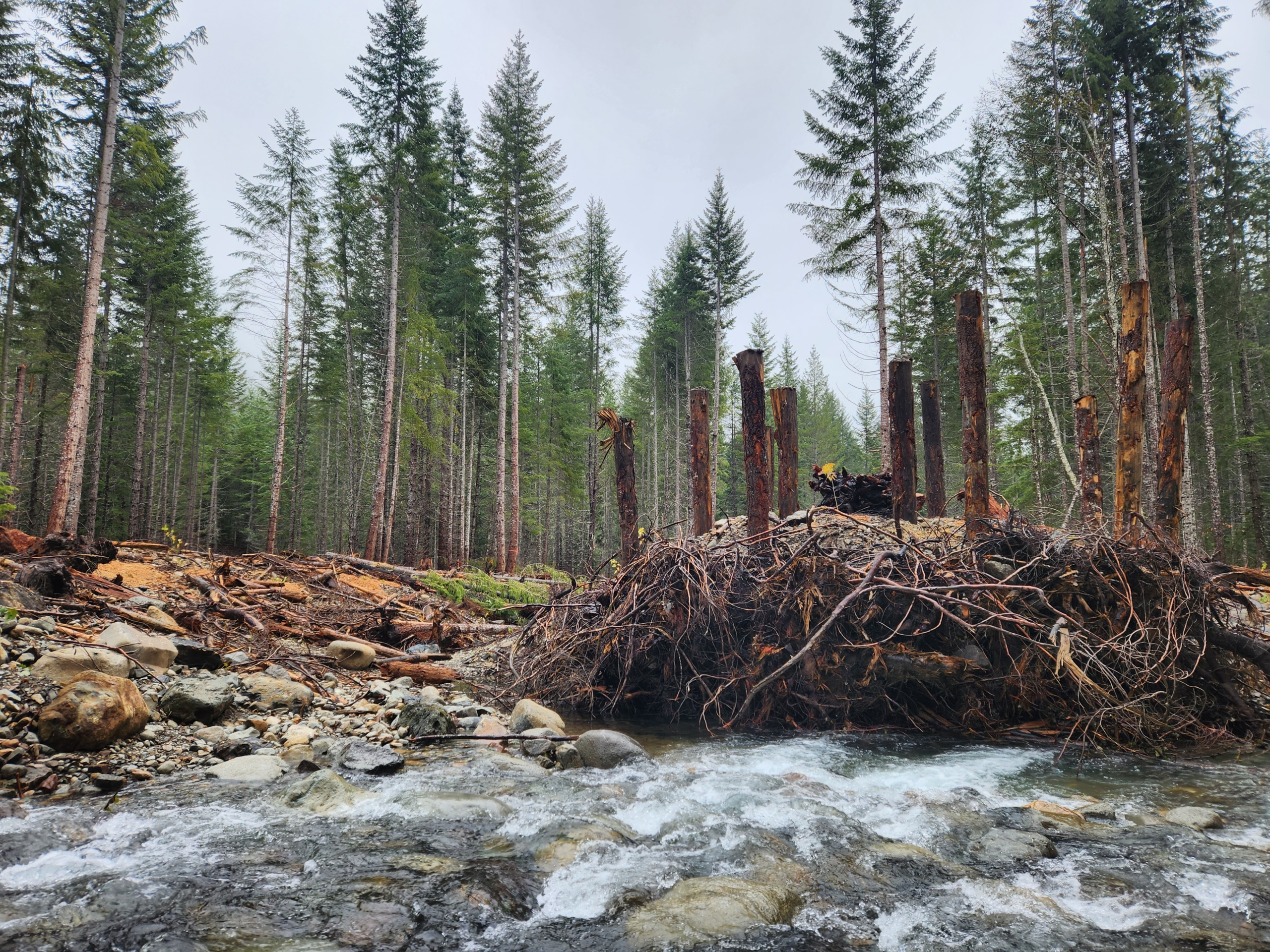
An engineered log structure placed in the Upper Kachess River during a 2023 river restoration project